Arsamia-on-Nymphaeus—the capital of Commagene on the way to Mount Nemrut
On the mountain route to the summit of Mount Nemrut, between the Kahta Çayı River and the overgrown hills, lies one of the most unusual places in Southeastern Anatolia. Arsamia-on-Nymphaeum—the former royal residence of the Kingdom of Commagene—offers not a tour of ruins, but an ascent along a sacred processional road featuring bas-reliefs of gods and kings right under the open sky. There is no conventional museum with glass display cases here: the entire space of Arsameia on the Nympha is the monument itself, where stone reliefs gaze down at you from sheer cliffs, and the ancient Greek inscription of Antiochus I has survived so well that researchers were able to read it at first glance after two thousand years buried beneath the earth.
History and Origin of Arsamea-on-Nymphaeum
The ancient city of Nymphaeum was renamed Arsamea in the 3rd century BCE by the Armenian king Arsames, who reigned from approximately 255 to 225 BCE. The name “Arsamea” is a direct toponymic reference to the founder. After Arsames’ death, the city was captured in 235 BCE by the Seleucid Antiochus Hierax, who had fled from his brother Seleucus II.
Later, Arsameia became part of the Kingdom of Commagene—one of the most enigmatic political entities of the ancient world, emerging from the ruins of the Seleucid Empire. The kings of Commagene positioned themselves as heirs to two great traditions at once—Greek and Persian. The famous Antiochus I of Commagene, who ruled in the 1st century BCE, built special funerary and cult complexes—hierothesia (from the Greek ἱεροθέσιον, meaning “sacred burial site”)—throughout his small kingdom with unprecedented splendor. The word hierothesion is known only in Commagene: it referred to royal cult sites that combined a mausoleum and a sanctuary.
Arsameia became the royal summer capital of Commagene and the site of the hierothesion for Mithridates I Callinicus—the father of Antiochus I. It was Antiochus who ordered the construction of a funerary complex in Arsameia in honor of his predecessor. In addition to the main hierotheion on Mount Nemrut, which Antiochus built for himself, and the second one in Karakuş, dedicated to the women of the royal family, the Arsamea site became the third most important in this system.
By Roman times, the city had already been abandoned. Roman soldiers used stones from local tombs to build bridges—a telling testament to the fate of even great monuments when they lose their guardians. Research on the monument began in 1951 thanks to the German archaeologist Friedrich Karl Dörner: a local resident led him to a “stone with a drawing,” which turned out to be a bas-relief of Mithras. Later, Dörner discovered the inscription wall of Antiochus I—in excellent condition, almost completely buried in earth. Systematic excavations took place from 1953 to 1987; some of the finds are now housed in the Gaziantep Archaeological Museum.
Architecture and What to See
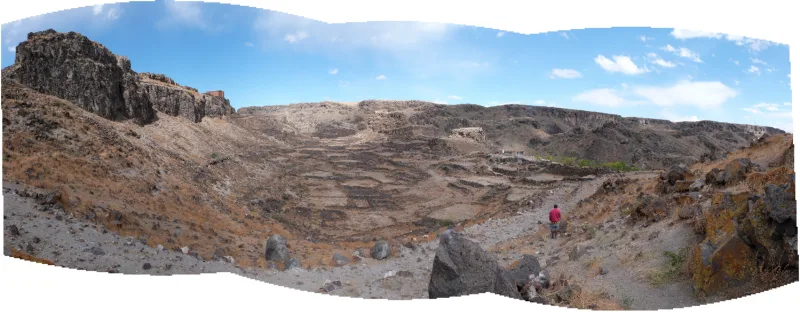
Arsameia is organized around a processional road that zigzags up the mountain in the shape of the letter Z. German researcher Dörner identified three key points along this route—Sections I, II, and III—and these are the main highlights of a visit.
The Mithras Relief (Section II)
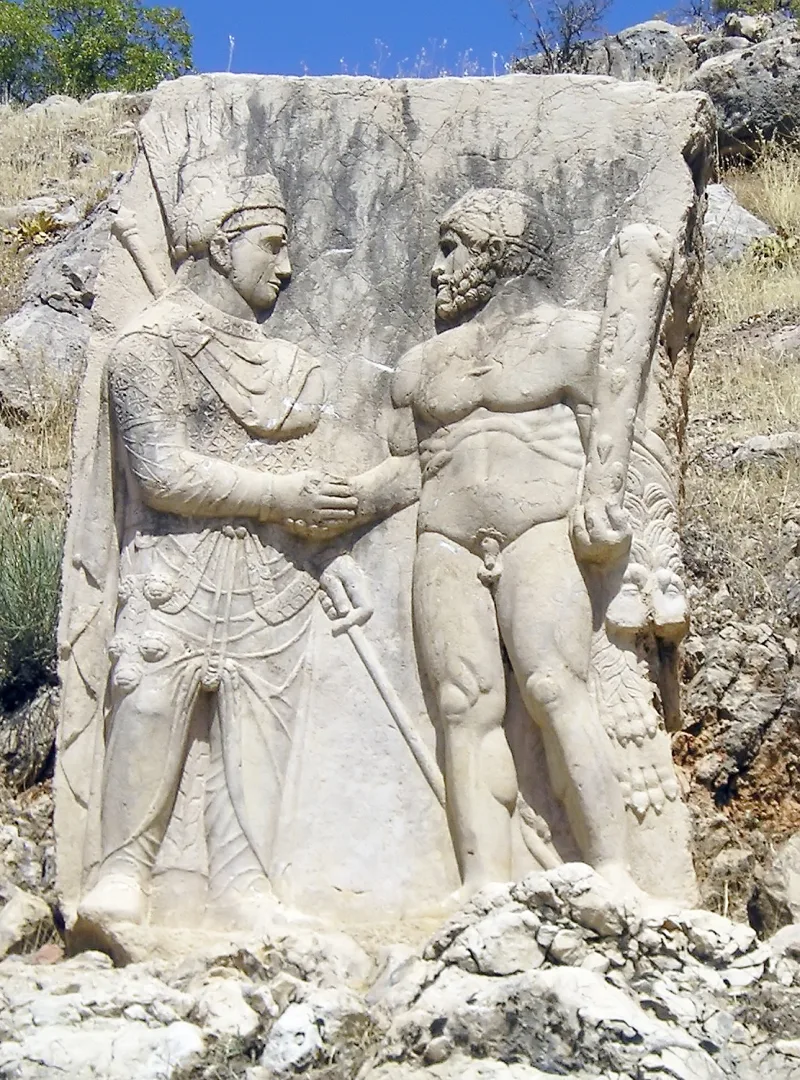
At the first point on the route—Section II—stands a fragment of a bas-relief that Dörner called the “Relief of Mithras.” This is the right side of a dexiosis scene—a handshake between a god and a mortal, typical of Commagene iconography. The surviving fragment depicts the sun god Mithras shaking hands with one of the kings—Antiochus or Mithridates. The left side of the relief—featuring the king—has survived only partially: Dörner found a fragment of a shoulder, identified as a royal figure based on the clothing. Similar scenes of dexiosis are scattered throughout Commagene—they symbolize the equality of rulers with the gods, which the kings of Commagene pursued persistently and consistently.
Tunnel and Underground Hall (Section I)
Section I is located at the first bend of the processional road. Here, the remains of another dexiosis have been preserved—the faces on it can no longer be identified. The main mystery of this site is a corridor carved into the rock, from which 14 steps lead down into a hall measuring approximately eight by eight meters with a ceiling height of about nine meters. The purpose of the hall remains unknown: Dörner suggested that it was a temple of Mithras, while other researchers consider it a possible burial site for Mithridates I.
Inscription Wall and Relief of Heracles (Section III)
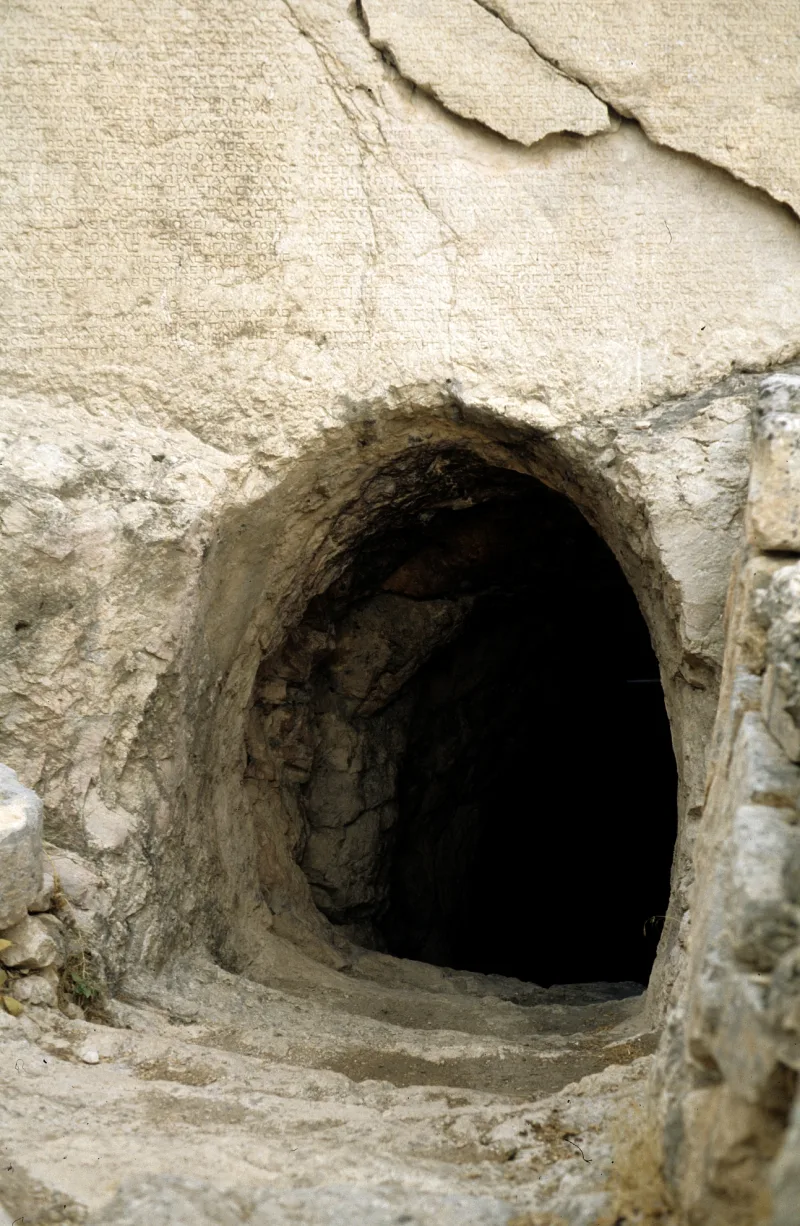
Arsamea’s greatest pride is the inscription wall of Antiochus I in Section III. The text, arranged in five columns, describes the history of the city’s founding and the construction of the hierotheion, as well as detailed instructions for performing rituals. The preservation of the inscription is remarkable: almost completely buried in earth since ancient times, it has survived virtually intact. Nearby is the best-preserved bas-relief of Commagene: one of the two kings shakes hands with Heracles, recognizable by his club. Below the wall, a 158-meter-long tunnel begins in the rock, plunging sharply downward—its purpose has never been determined.
The mountain’s summit and the mausoleum’s base
At the very summit, the foundations of buildings with mosaic floors dating to the 2nd century BCE have been discovered. Fragments of sculpture led Dörner to suggest that this was the site of Mithridates’ mausoleum, adorned with statues.
Yenikale Fortress and the Dovecote
Two kilometers from Arsameia, on the opposite bank of the Kahta Çayı, stands the Yenikale Fortress (“New Castle”). According to the inscription from Section III, the palace buildings of the Commagene rulers were located here. Today, the remains of a Mamluk castle are visible here, bearing inscriptions of the sultans Qalawun (1279–90), al-Ashraf Khalil (1290–93), and al-Nasir Muhammad (1293–1341). Nearby is the Dovecote, a room with 32 nesting niches for carrier pigeons, which served as a communication system as early as the 13th century.
Interesting Facts and Legends
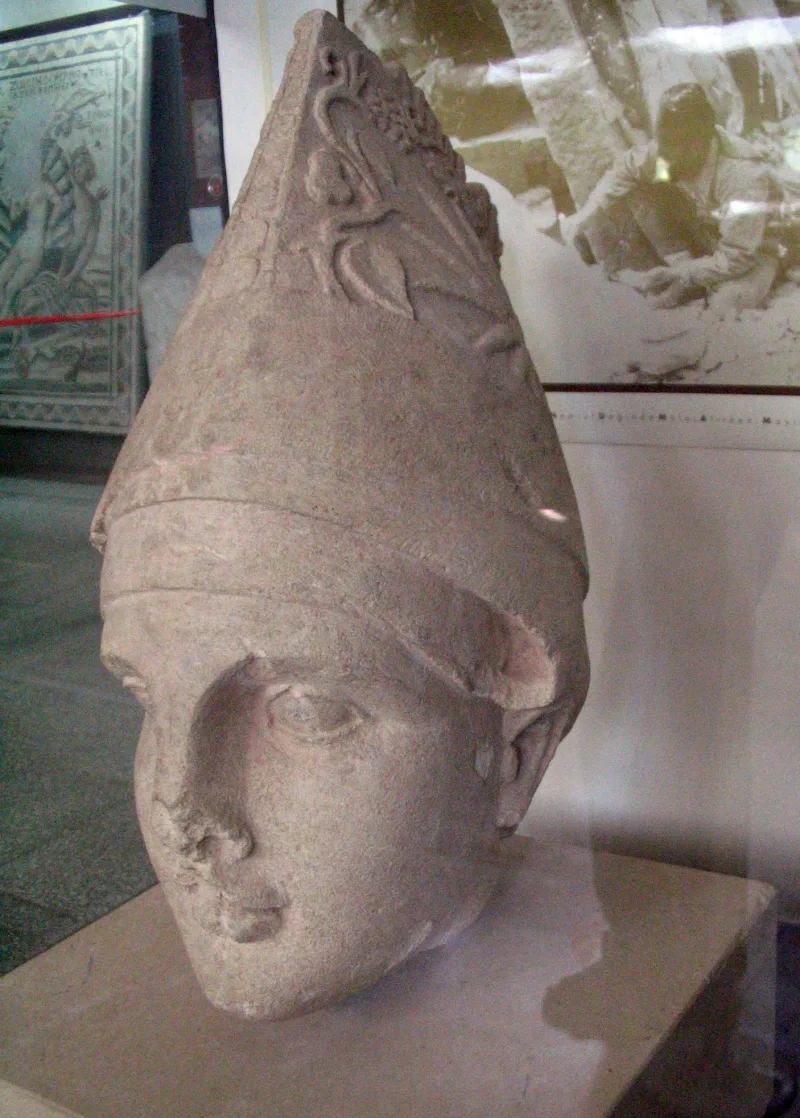
- Friedrich Karl Dörner conducted excavations in Arsamea from 1953 to 1987. The head of the statue of King Antiochus, found during the excavations, has since gone missing: researchers suspect it was taken abroad.
- A 158-meter-long tunnel leading from the inscribed wall deep into the mountain is one of Arsamea’s greatest mysteries. No one has yet determined why it was cut into the rock.
- The dovecote at the Yenikale fortress was used for military communications until the 13th century: it was from here that Sultan Qalawun received information about the movements of Mongol troops before the Second Battle of Homs.
- In the area west of Arsameia, researchers Dörner and Winkelmann discovered the first traces of metallurgical production in Commagene: the remains of furnace walls, slag, and coins.
- The word hierothesion—"hierothesion"—is unique to Commagene. Nowhere else in the Greek language does it appear with the meaning "royal funerary sanctuary."
How to get there
Arsamia is located in Eski Kâhta (Old Kâhta), Kâhta District, Adıyaman Province. The nearest airport is Adıyaman Airport (ADF), which receives flights from Istanbul and Ankara. It is about 40 km from Adıyaman to Kahta by bus or taxi (30–40 minutes). Kahta is the main tourist hub for visiting both Arsameia and Nemrut Dağı.
It is about 20 km from Kahta to Arsameia via a road through the picturesque Kahta Çayı Gorge. Arsameia is part of the standard “Golden Road of Commagene” tour route, along with Mount Nemrut, the Septimius Severus Bridge (Cendere Köprüsü), and the Karakuş Dam. It’s most convenient to go by car: the road is paved, and there are signs along the way. Organized day trips from Kahta are easy to find at local travel agencies.
Tips for travelers
Arsameia is open to visitors daily during daylight hours. Admission tickets are sold in Kahta and are typically valid for the entire complex of Commagene monuments (Nemrut, Karakuş, Cendere, Arsameia). Sturdy footwear is required: the trail is rocky and steep in places. Walking sticks will make the ascent easier.
Plan your visit to Arsameia in conjunction with Nemrut Dağı: most tourists make Arsameia their first stop in the morning on the way to the summit of Nemrut—it takes 1.5 to 2 hours to reach. The best time of year is April–June and September–October; in summer, temperatures reach 40°C and higher, and the road to Nemrut is open only from April through November.
Photographers will appreciate the morning light on the reliefs: by 8–9 a.m., the reliefs of Section III are illuminated by side light, which beautifully highlights the volume of the stone carvings. Bring water, snacks, and cash in Turkish lira—there are no facilities in Arsameia itself. Do not touch the stones or reliefs with your hands: the surface of the monument is sensitive to physical contact. Following the 2023 earthquakes, some roads in the region may have been damaged—check the current condition of the route before your trip. Arsameia on the Nymphaeus is one of the few sites in Turkey where you can experience a direct connection with antiquity without the intermediary of museum glass.